
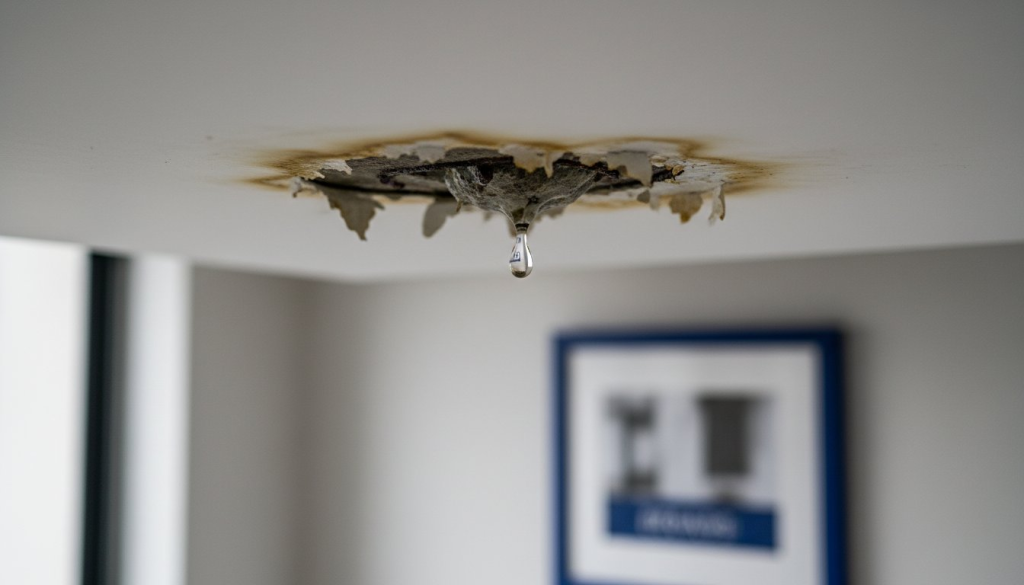
That persistent damp spot on the ceiling. The frustrating sight of paint bubbling and peeling on your wall. These are unsettling signs for any homeowner, often leaving you to wonder: is this just a cosmetic flaw, or the beginning of a much larger, more expensive problem? This slow, unwelcome intrusion of moisture is known as water seepage, and ignoring it can lead to mould growth, compromised structural integrity, and costly repairs down the road. We understand the concern and confusion that comes with discovering it in your home.
Consider this your clear, no-nonsense guide to taking back control. We are here to help you gain peace of mind by providing expert, straightforward answers. In this article, you will learn exactly how to identify the causes and signs of water seepage specific to properties in Singapore. Most importantly, we will outline the proven solutions and the steps you need to take to protect your home and resolve the issue for good. Let’s get started.
Decoding Water Seepage: More Than Just a Simple Drip
Have you noticed damp patches, peeling paint, or a musty smell in your home? You might be dealing with water seepage. Unlike a sudden gush of water, seepage is the slow, persistent process of water passing through porous materials like concrete, brick, or masonry. Think of it less like a running tap and more like a sponge gradually soaking up moisture. This slow infiltration is often hidden within your walls or floors, making it a sneaky but serious issue that points directly to a failure in your building’s waterproofing barrier. To understand the science behind what is seepage, it’s helpful to know it involves water moving through tiny pores and cracks under pressure.
Water Seepage vs. Water Leak: What’s the Key Difference?
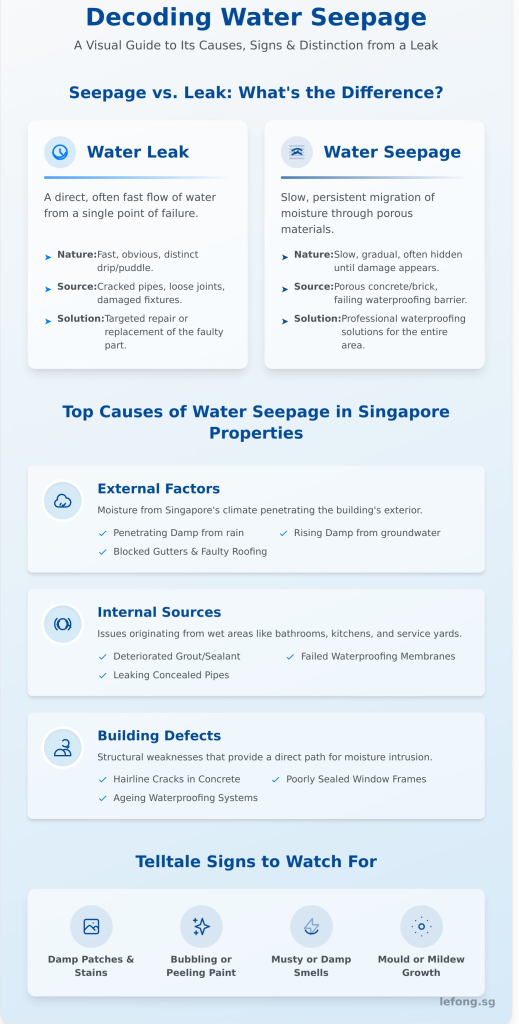
Many homeowners confuse seepage with a leak, but they are different problems requiring different solutions. Understanding the distinction is the first step to a proper diagnosis and effective repair.
- A leak is a direct flow of water from a specific point of failure, like a cracked pipe, a loose joint, or a damaged roof tile. It’s often fast, obvious, and creates a distinct puddle or drip.
- Seepage is widespread moisture migrating through a porous surface. There is no single “hole” to patch; the entire material is compromised. It is slow, gradual, and often only becomes apparent after significant damage has occurred.
Fixing a leak might involve replacing a pipe, while solving a seepage problem requires professional waterproofing solutions to create a new barrier against moisture.
How Water Moves Through Concrete and Walls
Water is relentless and can enter your home in two primary ways. Hydrostatic pressure occurs when groundwater builds up against your foundation, forcing moisture through tiny cracks in the concrete. Capillary action is the ability of a material to draw moisture upwards against gravity, much like a plant stem draws water. This is why you might see dampness rising from the floor up the wall. In Singapore, our high humidity adds another layer of complexity, contributing to overall dampness and making structures more vulnerable to moisture intrusion.
Top Causes of Water Seepage in Singapore Properties
Identifying the cause of water seepage is the most critical step toward a permanent solution. It’s important to understand that the damp patch you see on your wall or ceiling is merely a symptom; the actual source of the water could be located elsewhere. Simply painting over the stain will not fix the underlying issue. A professional diagnosis helps pinpoint the root cause, ensuring the repair is effective and long-lasting.
External Factors: The Battle Against Rain and Groundwater
Given Singapore’s tropical climate, your property is in a constant fight against moisture from the outside. In HDBs, condos, and landed homes alike, external elements are a primary cause of water intrusion. The most common culprits include:
- Penetrating Damp: During prolonged, heavy rain, water can saturate and penetrate porous exterior walls. This is especially common in older buildings where the external paint or plaster has worn thin.
- Rising Damp: A frequent issue for landed properties, this occurs when groundwater from the soil travels up through the foundation and into the walls. Understanding the various causes and solutions for basement moisture highlights how ground-level water can impact a structure.
- Blocked Gutters & Faulty Roofing: When gutters are clogged with leaves or debris, rainwater overflows and runs down external walls, leading to saturation and leaks over time.
Internal Sources: Bathrooms, Kitchens, and Wet Areas
Often, the problem originates from within your home, particularly in areas with frequent water usage. These internal leaks can be slow and subtle, causing damage over months or even years. Key sources to check are:
- Deteriorated Grout or Sealant: The sealant around sinks, bathtubs, and shower trays degrades over time, creating small gaps that allow water to seep into the wall or floor structure with every use.
- Failed Waterproofing Membranes: The waterproof layer beneath the tiles in your bathroom, balcony, or service yard can fail due to age or poor installation, allowing water to leak to the unit below you.
- Leaking Pipes: A slow leak from a concealed water pipe within a concrete wall or floor is a common source of persistent water seepage that is difficult to detect without specialised equipment.
Building Defects: Cracks and Compromised Structures
Sometimes, the issue lies with the integrity of the building itself. These structural weak points can affect any property type and often worsen over time if left unaddressed.
- Hairline Cracks: Small cracks in concrete walls or floors may seem harmless, but they can provide a direct path for moisture to enter, especially when exposed to rain.
- Poorly Sealed Window Frames: Gaps between the window frame and the wall are common points of failure, allowing rainwater to be driven inside during a storm.
- Ageing Waterproofing Systems: The original waterproofing applied during construction has a limited lifespan. Over many years, it can degrade and lose its effectiveness, requiring professional intervention.
Are You Seeing These Telltale Signs of Seepage?
Discovering water damage early is the key to preventing costly structural repairs and protecting your home’s value. Think of this as a simple diagnostic checklist. We encourage you to walk through your property and look for these common indicators of water seepage. Spotting them now can save you significant time, money, and stress down the line.
Visual Clues: What to Look For on Walls and Ceilings
Your eyes are your first and best tool for detection. Keep a look out for subtle changes on your interior surfaces, as they often point to a bigger problem hiding behind the paint. Be sure to check corners, areas near windows, and ceilings below bathrooms or air-con units.
- Damp Patches or Stains: Look for persistent wet spots or discoloured areas, often appearing as yellow or brown stains on your walls or ceiling.
- Bubbling or Peeling Paint: Moisture pushing from behind the wall will cause paint and plaster to bubble, flake, or peel away from the surface.
- Efflorescence: Have you noticed a white, chalky, or crystalline powder on concrete or brick surfaces? This is a salt deposit left behind as water evaporates.
- Mould or Mildew: Black, green, or white spots are a clear sign of a moisture problem. It is crucial to understand the dangers of mold and moisture, as they can pose health risks to your family.
Sensory Clues: What You Can Smell and Feel
Sometimes, the first sign of a problem isn’t something you see, but something you smell or feel. Trust your senses—if an area in your home feels “off,” it’s worth investigating further. These clues often appear in enclosed spaces like basements, storerooms, or cabinets.
Increased Humidity: A room that feels consistently damp, humid, or stuffy compared to the rest of your home often points to an underlying moisture issue.
Musty Odours: A persistent earthy or musty smell that doesn’t go away is a classic sign of hidden dampness and potential mould growth.
Damp or Cold Surfaces: If a wall or floor feels unusually cold or damp to the touch, it indicates that moisture is present within the structure.
The Hidden Dangers: Why Ignoring Seepage is a Costly Mistake
A small damp patch on the wall might seem harmless, but it’s often the first sign of a deeper problem. Ignoring water seepage is more than a cosmetic issue; it’s a risk to your property’s structure, your family’s health, and your financial stability. Viewing repairs as a necessary investment is the first step toward protecting your most valuable asset here in Singapore.
Risks to Your Property’s Structural Integrity
Over time, constant moisture silently compromises the very framework of your home. What starts as a minor leak can lead to significant and expensive structural failures if left unaddressed. Key risks include:
- Spalling Concrete: Moisture penetrates concrete and corrodes internal steel rebars. As they rust and expand, they force the concrete to crack and flake away, weakening critical structural components.
- Timber Decay: Wooden beams, door frames, and flooring can absorb moisture, leading to rot that severely reduces their strength and stability.
- Foundation Damage: Persistent dampness degrades plaster, drywall, and can even weaken the foundational elements of your building, threatening its overall integrity.
Health Hazards of Mould and Poor Air Quality
The persistent dampness from water seepage creates the perfect breeding ground for mould and mildew. These fungi release microscopic spores into the air, which can have serious health implications, especially in our humid climate. Exposure can trigger allergic reactions, asthma attacks, persistent coughs, and other respiratory problems. The risk is significantly higher for children, the elderly, and anyone with existing sensitivities.
The Financial Impact: Devaluation and Spiralling Costs
From a financial perspective, inaction is the most expensive choice. A history of unresolved water issues is a major red flag for potential property buyers and can lower your home’s resale value. Delaying action allows a small problem to escalate; a minor waterproofing fix today can prevent major structural repairs costing thousands of dollars tomorrow. This doesn’t even include the cost of replacing damaged furniture, flooring, and personal belongings. Protecting your home now is the most financially sound decision you can make. If you suspect an issue, getting a professional diagnosis is the first step to securing your investment.
How Professionals Diagnose and Stop Water Seepage for Good
While DIY patches might seem like a quick fix, they often only cover up the symptoms of water seepage. The underlying cause remains, leading to recurring problems and more significant damage over time. To solve the issue permanently, a professional approach is essential. At Le Fong, our trained technicians act as your trusted partner, using a methodical process to diagnose the root cause and deliver a lasting solution for your peace of mind.
The professional process is built on two key stages: accurate diagnosis followed by a targeted repair strategy.
Step 1: Advanced and Accurate Leak Detection
Finding the precise source of a leak is critical. Guesswork leads to unnecessary hacking and ineffective repairs. Our experts use non-destructive technology to pinpoint the problem accurately, saving you time and cost.
- Thermal Imaging Cameras: These powerful tools allow us to “see” behind walls and floors. They detect subtle temperature differences caused by hidden moisture, revealing the exact path of the water without any drilling or hacking.
- Electronic Moisture Meters: Once a damp area is identified, we use professional-grade moisture meters to measure the moisture content within the concrete or plaster. This confirms the affected zones and helps assess the severity of the problem.
- Flood Testing: In complex cases, we may conduct a controlled flood test on areas like balconies or bathrooms. This allows us to safely replicate the leak and confirm the water’s entry point beyond any doubt.
Step 2: Tailored Waterproofing and Repair Solutions
With the source confirmed, we apply the most effective repair technique for your specific situation. We don’t believe in one-size-fits-all solutions. Instead, we use industry-leading methods to stop the water seepage at its source and prevent it from returning.
- PU Injection Grouting: This is a highly effective method for sealing active leaks in concrete. We inject a polyurethane (PU) grout into cracks, which reacts with water to expand and form a permanent, flexible seal from the inside.
- Waterproofing Membranes: For surfaces like rooftops, bathrooms, and balconies, we can apply a new, seamless liquid waterproofing membrane. This creates a durable, impenetrable barrier against future water intrusion.
- Cementitious Coatings: Ideal for basement walls and concrete slabs, these specialised cement-based coatings are applied to create a tough, waterproof layer that bonds directly with the structure.
Don’t let water damage compromise your home. A professional diagnosis is the first step toward a permanent solution. Suspect seepage? Let our experts find the source.
Your Proactive Solution to Water Seepage
Understanding the causes and recognising the early signs of water seepage is the first critical step to protecting your home. As we’ve seen, what starts as a small damp spot can quickly escalate into significant structural damage and health risks if left unaddressed. The key takeaway is clear: proactive detection is always better and more cost-effective than reactive repair.
If you’ve noticed any telltale signs, acting decisively is crucial. As trusted specialists in waterproofing and concrete repair established since 2002, Le Fong provides the expert diagnosis you need. Our technicians use Advanced Thermal Imaging Detection to pinpoint the source of moisture with precision, ensuring an effective and lasting solution. Noticed signs of seepage? Get a professional diagnosis from Le Fong to protect your investment.
Don’t let a small leak become a major headache. Take control today and ensure your property remains safe, dry, and structurally sound for years to come.
Frequently Asked Questions About Water Seepage
Can I fix minor water seepage myself?
While DIY sealants may offer a temporary fix for very minor issues, they often fail to address the root cause. Water seepage is typically a symptom of a deeper problem, such as a failed waterproofing membrane or cracked pipe. An incorrect repair can trap moisture and lead to more significant structural damage or mould growth. For a reliable and lasting solution, we always recommend a professional diagnosis to accurately locate the source and apply the correct repair method.
How much does it cost to repair water seepage in Singapore?
The cost of repairs varies based on the severity and location of the issue. Minor repairs, such as using polyurethane (PU) injection to seal cracks in concrete, can range from S$300 to S$800. More extensive work, like hacking and re-applying waterproofing membranes in a bathroom, can cost between S$1,500 and S$5,000 or more. A professional assessment is needed to provide an accurate quote based on your specific situation.
In an HDB or condo, who is responsible for fixing inter-floor seepage?
In Singapore, inter-floor leaks are generally a shared responsibility between the upper and lower-floor flat owners. Under the Strata Management Maintenance Act (SMMA), the upper-floor unit is presumed responsible for fixing the source of the leak, while the lower-floor unit is responsible for repairing their ceiling. The costs are typically split equally. It is best to first contact your neighbour and, if needed, engage your condominium’s MCST or HDB for assistance and mediation.
How long does a professional water seepage repair take?
The duration depends entirely on the repair method required. Non-invasive techniques like PU injection are very efficient and can often be completed within a few hours. However, more comprehensive solutions that involve hacking tiles and re-applying a waterproofing membrane are more time-consuming. Such projects may take anywhere from 3 to 7 days to allow for removal, application, and proper curing of the new materials before tiles can be reinstalled.
Is water seepage damage covered by homeowner’s insurance?
This depends on your specific policy. Most standard home insurance policies in Singapore cover sudden and accidental water damage, such as from a burst pipe. However, damage from gradual water seepage that occurs over time due to poor maintenance, wear and tear, or faulty construction is often excluded. It is crucial to read your policy documents carefully or speak directly with your insurance provider to understand the full extent of your coverage.
How can I prevent water seepage from happening in my home?
Proactive maintenance is key to prevention. Regularly inspect sealant and grout lines in bathrooms and kitchens, and re-apply them when they show signs of cracking. Ensure all plumbing fixtures are in good working order and fix any drips promptly. Keep your drainage pipes and roof gutters clear of blockages to prevent water overflow. Maintaining good ventilation in damp areas also helps reduce moisture build-up, protecting your home from potential seepage issues.