
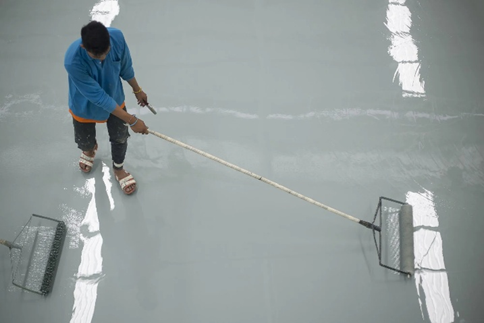
Polyurea coatings are widely regarded as one of the most advanced waterproofing and protective coating systems available today. Fast-curing, seamless, and highly durable, polyurea has become the preferred choice for commercial, industrial, and even residential applications across Singapore.
But despite its high-performance potential, polyurea coatings are not foolproof. When not installed by trained professionals, several issues can arise—many of which result in premature failure, wasted costs, and the need for rework.
At Le Fong Building Services, we are certified experts in polyurea application, and in this blog, we break down the most common problems associated with polyurea coatings, why they happen, and how to prevent them.
1. Incorrect Mixing of Components
Polyurea is a two-part system comprising an isocyanate and a resin blend. Proper mixing is critical. If the ratios are off, or the mixture is not blended thoroughly, the resulting coating will:
- Fail to cure properly
- Remain tacky or soft
- Peel prematurely
- Form inconsistent film thickness
This often happens when non-accredited contractors or untrained applicators attempt to mix by hand, or fail to account for component ratios. Le Fong uses precision mixing equipment and batch-controlled formulations to ensure consistency.
2. Poor Adhesion to the Substrate
Unlike other coatings, polyurea cures in seconds. This means there’s no room for error during application. If the surface isn’t properly cleaned, primed, or dried, the polyurea coating may:
- Delaminate in sheets
- Fail to bond at all
- Appear intact but peel with minimal force
We have seen cases in Singapore where coatings lift cleanly off because of trapped moisture or poor priming. That’s why we always test substrates for dew point and moisture content before application.
3. Blistering
Blisters in polyurea coatings are typically caused by:
- Surface moisture
- Improper priming
- Incorrect mix ratios
- Application over contaminated surfaces
How to identify the cause:
- Smooth back of blister: Likely contamination or moisture.
- Rough back of blister: Possibly isocyanate-rich mixture or substrate gas release.
- Sticky/gummy feel: Uncured polyurea or improperly cured primer.
Proper surface prep and moisture control is essential in humid climates like Singapore’s. We conduct site-specific assessments before every job.
4. Pinholes
Pinholes form when trapped moisture or air in porous substrates (e.g., concrete) is vaporised during spray application. These tiny holes compromise waterproofing integrity.
Solution:
- Apply an epoxy or cementitious filler to seal pores before priming
- Use polyurethane mastic for small areas
- Always apply in falling temperature conditions, not rising heat, to minimise outgassing
5. Blow Holes in Concrete
Blow holes occur during concrete pouring, when air bubbles form near the shutter face. If not filled before polyurea application, these holes can compromise the finish and allow water ingress.
Best Practice:
- Pre-fill holes using cementitious or epoxy fillers
- Clean with high-pressure water jet
- Prime and then apply polyurea coating
Le Fong’s concrete coating systems include full substrate preparation to avoid blow hole-related failures.
6. Cavities Around Details
Cavities that resemble melted wax form when too much polyurea is applied around complex features like upstands or penetrations. These weak spots are prone to leaks and mechanical damage.
Pre-detailing the area before main application is the best prevention method. At Le Fong, we always coat corners, joints, and features first—before doing the rest of the surface.
7. Surface Contamination
Even a professionally prepared surface will fail if it isn’t clean. Dust, oil, or grease act as bond-breakers. The polyurea will blister or delaminate from those contaminated areas.
We ensure ISO-standard surface cleaning, using industrial degreasers and high-powered surface preparation equipment to ensure optimal adhesion.
8. Application in Wrong Conditions (Dew Point Sensitivity)
Polyurea should never be applied when the substrate is within 3°C of the dew point. Doing so traps moisture under the coating, which leads to large-scale delamination.
Singapore’s tropical climate makes this especially critical. We use dew point meters and substrate moisture meters on every project to avoid this common error.
How to Prevent Polyurea Coating Problems
Here’s what Le Fong does to ensure problem-free polyurea installation:
- Thorough surface inspection using moisture and adhesion testers
- Professional mixing equipment to ensure homogeneity
- Substrate priming and sealing to control porosity and bond strength
- Accredited spray applicators trained for Singapore’s climate
- On-site quality control to monitor weather, cure rate, and consistency
- Tailored solutions using aliphatic or aromatic polyurea, based on your needs
Frequently Asked Questions (FAQ)
1. Can polyurea be applied during Singapore’s rainy season?
Yes, but only if the surface is dry and dew point conditions are suitable. Polyurea is moisture-sensitive during application.
2. How long does polyurea last once applied properly?
With correct installation, polyurea coatings can last over 25 years, offering exceptional UV, chemical, and abrasion resistance.
3. Why do some polyurea coatings turn yellow?
That’s typically due to the use of aromatic (non-UV resistant) polyurea. For outdoor use, aliphatic polyurea is recommended.
4. Can failed polyurea coatings be repaired?
Yes, but the area must be cut back, cleaned, primed, and re-coated. Timely diagnosis is key to successful repairs.
5. How can I tell if my polyurea was applied incorrectly?
Blisters, peeling, pinholes, or discoloration are common signs. Contact a professional like Le Fong to inspect and advise.
Trust the Experts at Le Fong
Polyurea coatings are powerful—but only when applied correctly. Don’t take chances with unqualified applicators. At Le Fong, we deliver precision polyurea installations using certified methods and equipment, backed by decades of waterproofing and coating expertise in Singapore’s demanding climate.